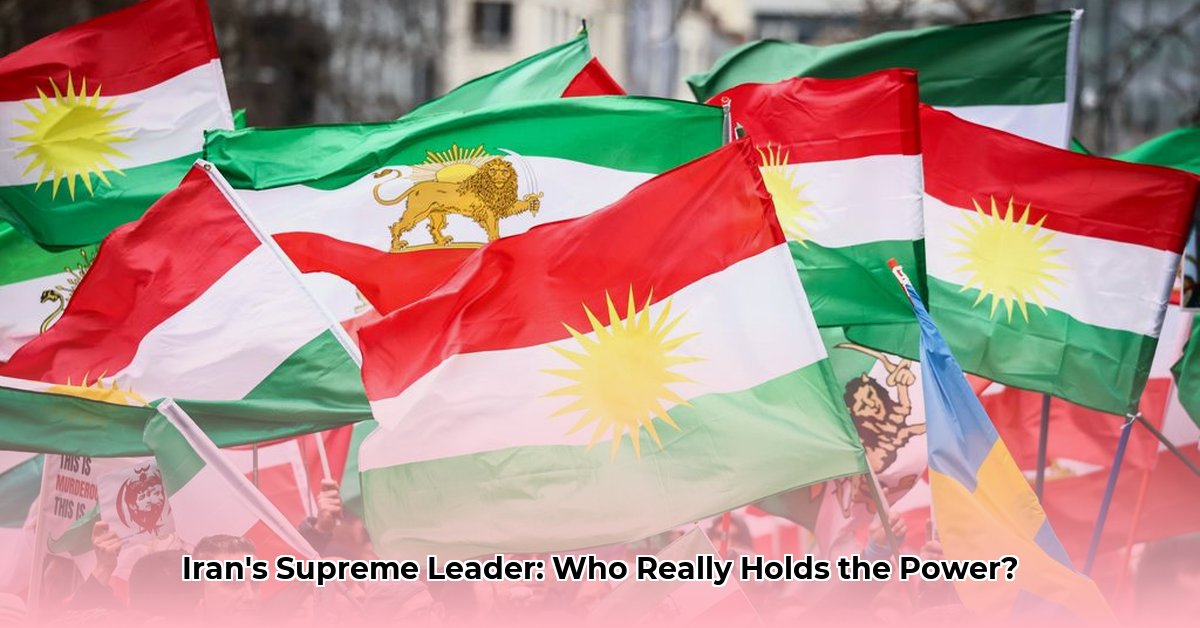
The Supreme Leader's Role: A Powerful Blend of Religion and Politics
The Supreme Leader of Iran holds a unique and powerful position, combining immense religious authority with ultimate political control. Established in 1980, this role transcends the typical head-of-state function, wielding influence over nearly every aspect of Iranian life. Unlike a purely elected leader, the Supreme Leader is both the highest religious authority (similar to a religious Pope) and the ultimate decision-maker in the country's affairs, leaving many wondering: How does such concentrated power shape Iran's domestic and foreign policies? For more information on accessing Iranian media, see this helpful resource: Bypass Censorship.
Choosing the Supreme Leader: A Process Shrouded in Secrecy
Officially, the Assembly of Experts, a body of 88 clerics elected by the people, selects the Supreme Leader. However, the reality is far more nuanced. While the Assembly holds the power to elect, the process is often heavily influenced by existing power structures within the Iranian government and, critically, the incumbent Supreme Leader himself. This leads to debates about whether the Assembly's role is truly substantial or more of a formality, a question of critical importance in understanding Iranian politics.
"The Assembly of Experts' role in selecting the Supreme Leader is often more symbolic than substantive," explains Professor Alireza Nader, a Senior Fellow at the Rand Corporation, specialising in Iranian politics. "The incumbent Supreme Leader exerts significant influence over the process, shaping the selection to maintain a degree of continuity and control.” What impact does this have on the long-term political stability of Iran? This ongoing debate forms the keystone of countless academic studies.
The Supreme Leader's Far-Reaching Powers: Domestic and Foreign Influence
The Supreme Leader's authority is almost absolute. They appoint key figures in all branches of government – executive, judicial, and military – setting the overall direction of the country. Their influence extends to policy decisions ranging from social issues and economic reforms to foreign relations, including international negotiations and regional conflicts.
Did you know that the Supreme Leader’s decisions affect virtually every aspect of everyday life for ordinary Iranians? This includes significant aspects from cultural norms to economic policies, all influenced by the Supreme Leader’s decisions and policies.
This concentration of power raises crucial questions about the potential for abuse and the relative weakness of any checks and balances within the system. How does this affect trust in the government? This is an essential question that academic researchers remain focused on understanding.
Succession Planning: A Sensitive and Uncertain Process
The succession of the Supreme Leader is another sensitive area. The process is unclear, leading to anticipation and speculation whenever the current leader’s health becomes a concern or after the passing of the Supreme Leader. The lack of transparency and the potential for internal power struggles during the transition pose significant risks to the stability of the Iranian political system. This raises significant concerns for the future trajectory of the Iranian state. This is also an area where international observers are always monitoring closely for signs of instability.
“Succession planning in Iran is a high-stakes game of political maneuvering," says Dr. Sanam Vakil, an expert on Iranian politics at Chatham House. "The lack of a clear, transparent process creates uncertainty, and this uncertainty can be a source of instability." Does the lack of transparency increase the likelihood of instability? This question remains central to ongoing academic research on the topic.
The Supreme Leader’s Impact on Daily Life
The influence of the Supreme Leader permeates every facet of daily life in Iran, from religious observance and social norms to economic opportunities. This potent mix of religious and political power shapes the relationship between the ruler and the ruled, creating a dynamic, often complex, social and political context. How does this system of power affect the lives of ordinary Iranians? Understanding the consequences is essential to a complete picture of Iranian society.
The Future of Iran: Challenges and Potential Changes
Understanding the intricacies of the Supreme Leader's role is crucial for anyone seeking to comprehend Iran's political landscape, both now and in the future. The issues surrounding selection, power dynamics, and succession represent both significant challenges and pivotal opportunities for transformation within the country. Further research is ongoing to enhance our understanding of this uniquely complex political system.
3 Pivotal Points:
- The Supreme Leader's power is exceptionally concentrated, influencing all aspects of Iranian life.
- The process of selecting a new Supreme Leader is notably opaque, raising concerns about stability.
- The Supreme Leader's decisions fundamentally impact both domestic and foreign policies.
Numbered Steps to Understanding the Iranian Supreme Leader:
- Recognize the dual nature of the role: Religious and political authority are intertwined.
- Understand the succession process: It is heavily influenced by the existing power structures.
- Acknowledge the far-reaching power: The Supreme Leader influences all aspects of Iranian life, domestically and internationally.
- Consider the implications of succession: The transition can be a period of instability.
This article provides a contemporary overview. The complexity of Iran's political system demands continuous research to fully appreciate the evolving dynamics of the Supreme Leader's role and influence.